Android 8.0 Oreo is now rolling out to all supported Pixel and Nexus devices across the globe

Android 8.0 Oreo was officially named last Monday, which is when the final version of it started going out to Pixel and Nexus devices enrolled in the Android Beta program. Yesterday, Verizon started rolling out the same build of Oreo to Pixel and Pixel XL units it’s sold.

In the meantime, the Oreo update has been spotted arriving on many more carriers across the world, for supported Pixel and Nexus devices – which are the Pixel and Pixel XL, Pixel C, Nexus 6P, Nexus 5X, and Nexus Player. So at this point the rollout is pretty much hitting every device that Google’s in charge of, software-wise.

The company has also posted the usual factory images and OTA zip files for anyone to download (check out the Source links below). You can install the OTA zip if you’re tired of waiting to receive the update through an actual over-the-air rollout. Though if you own a supported device and haven’t yet seen a notification regarding the new software, it’s best to first try and manually check by going to the relevant Settings menu.

The build number is OPR6.170623.011 for Pixels and Pixel XLs on Bell, Telus, Telstra, T-Mobile, Sprint, US Cellular, and Rogers/Fido, and OPR6.170623.012 for every other carrier. The Nexus 6P gets the build ending in 013, but Google notes this is not for T-Mobile, US Cellular, or Fi – but hasn’t yet provided an alternative download. The Nexus 5X’s build is 013 also, while the Pixel C gets 010 and the Nexus Player gets nothing at this point – hopefully it won’t be too long before the console sees its update too.


120W ADP-120MH-D AC/DC Laptop AC Adapter for MSI GE60 GE70 19.5V 6.15A

120W Slim ADP-120LH B Laptop AC Adapter for Lenovo Y410P Y510P

200W 19V 10.5A Laptop AC Adapter for Chicony Clevo K790S G7 Z7-S2SP2

200W 19V 10.5V Laptop AC Adapter for Samsung NP700G7A NP700G7C DP700A7D

20Wh 7.4V New Battery Dell TM9HP For Dell Latitude 13 7350 Ultrabook

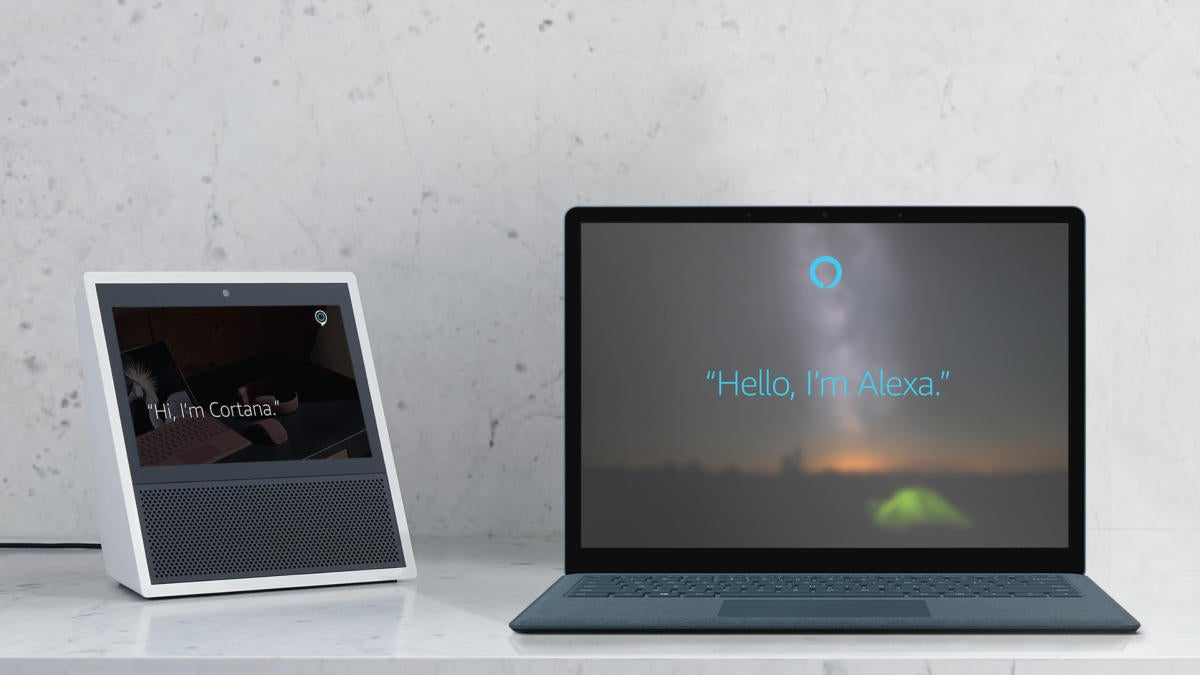
Microsoft’s Cortana and Amazon’s Alexa are going to work together

Cortana and Alexa just went from being rivals to being besties. Microsoft and Amazon’s respective digital assistants are teaming up to work together later this year, the companies surprisingly announced today.

cortana alexa

That means you’ll be able to tap into Alexa’s smarts via Cortana on Windows 10 PCs and (further down the line) Microsoft’s mobile Cortana apps, or access Cortana via Amazon’s Echo devices and Alexa-enabled phones like the HTC U11 and Huawei Mate 9. You’ll need to specifically summon the assist, however, by saying “Cortana, open Alexa” or “Alexa, open Cortana.”

The timing might seem weird with Cortana-powered devices like the Harmon Kardon Invoke speaker launching this fall. But with both digital assistants owning a firm niche—PCs and Office software for Microsoft, smart speakers for Amazon—the collaboration helps them extend their reach without stepping on each other’s toes too much. Cortana and Alexa need to battle Apple’s Siri and Google’s Assistant, and unlike the competition they aren’t baked into smartphones by default.

“This agreement makes strategic sense as Alexa gets access to over 500 million Windows 10 seats and also gets access to high-quality productivity skills,” Patrick Moorhead, president and principal analyst at Moor Insights & Strategy, said in an email. “Cortana gets access to very diverse Alexa consumer and home automation skills.”

While the domain of digital assistants have largely been walled gardens to this point, Microsoft and Amazon are actively promoting how Cortana and Alexa work better together thanks to their focus on different aspects of your life.

“Say you are at work, and you receive a text from your partner saying, ‘We’re running low on diapers,’” Microsoft says in its announcement post. “In the future, on your Windows 10 PC, iPhone or Android phone, you could simply say, ‘Hey Cortana, open Alexa,’ and ask Alexa to order diapers using your preferred payment method for your Amazon account.”

Handy!

Conversely, Microsoft writes, “What if you’re making breakfast in the morning and need to know if you have enough time to drop off the dry-cleaning before work? On your Alexa device, you can say, ‘Alexa, open Cortana,’ and ask when your first meeting is. If you won’t have enough time, simply ask Alexa to open Cortana again and set a reminder for the end of your workday to drop off the clothes.”

You could also use Cortana to ask Alexa to control your smart home devices, since many support Alexa skills. Which begs the question: Will this kill Microsoft’s attempts at bolstering Cortana support before it really gets off the ground? The Cortana Skills Kit preview only launched in May. Allowing Cortana to access the thousands of available interactions available on the wildly successful Amazon Echo could squash the dream of Cortana-powered appliances before it happens. Time will tell.


120W ADP-120MH-D AC/DC Laptop AC Adapter for MSI GE60 GE70 19.5V 6.15A

120W Slim ADP-120LH B Laptop AC Adapter for Lenovo Y410P Y510P

200W 19V 10.5A Laptop AC Adapter for Chicony Clevo K790S G7 Z7-S2SP2

200W 19V 10.5V Laptop AC Adapter for Samsung NP700G7A NP700G7C DP700A7D

20Wh 7.4V New Battery Dell TM9HP For Dell Latitude 13 7350 Ultrabook

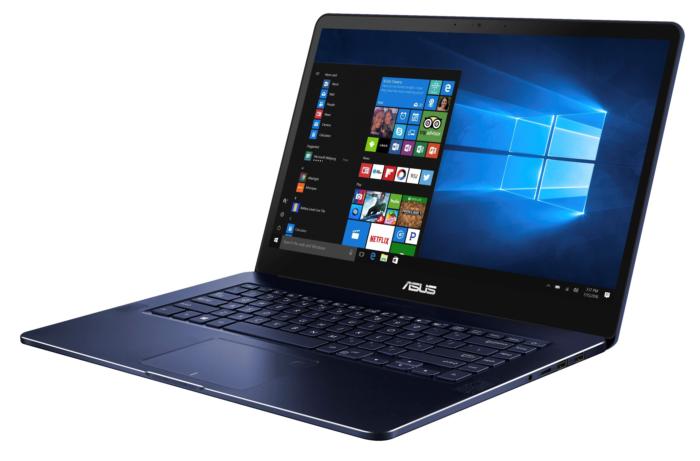
Asus ZenBook laptops power up with quad-core CPUs and discrete Nvidia graphics

Bigger power comes to Asus’ slim, light laptops.

The battle over thin and light notebooks flared back to life at IFA 2017 on Wednesday. Mere hours after Acer revealed the Switch 7 Black Edition, a 2-in-1 laptop with a detachable keyboard and dedicated graphics chips, Asus unleashed an army of svelte new ZenBook laptops equipped with Intel’s new quad-core 8th-gen Core CPUs and discrete Nvidia GPUs of their own. We loved the last ZenBook Flip that crossed PCWorld’s test bench, so let’s dig in!

Asus beat the drum loudest for the ZenBook Flip 14, which it calls “the world’s thinnest 2-in-1 laptop with high-performance discrete graphics.” The 13.9mm-thin laptop packs the same somewhat mysterious GeForce MX150 chip as Acer’s Switch 7 to achieve that feat. Nvidia says the MX150 is three times more efficient and 30 percent faster than the GeForce 940MX it replaced. The laptop’s no slouch in other areas either, with a quad-core Core i7 processor, 16GB of RAM, and a 512GB PCIe SSD.

The ZenBook Flip 14 includes niceties beyond swanky graphics and a small size, though. Audio duties are handled by Harman Kardon, and the notebook packs a fingerprint sensor for Windows Hello biometric authentication. A “NanoEdge” bezel let Asus include a 14-inch 1080p panel while giving the laptop a similar footprint to most 13-inch notebooks—and that display can flip a full 360 degrees.

zenbook flip s

The ZenBook Flip 15 is a bit larger and swaps out Nvidia’s MX150 chip for gamer-friendly GTX 1050 graphics. Asus puts the extra space to good use, offering your choice of 1080p and 4K displays with a 178-degree field of view, Thunderbolt 3-equipped USB-C ports, and up to a 2TB hard drive in addition to everything you find in the Flip 14.

Asus says the Flip 15 is the most powerful ZenBook Flip ever. If you want to push your gaming experience even further, the company also announced the ROG Station X2. This second-generation Asus graphics card dock lets you power up your laptop with full-blown desktop graphics cards. It connects over Thunderbolt 3.

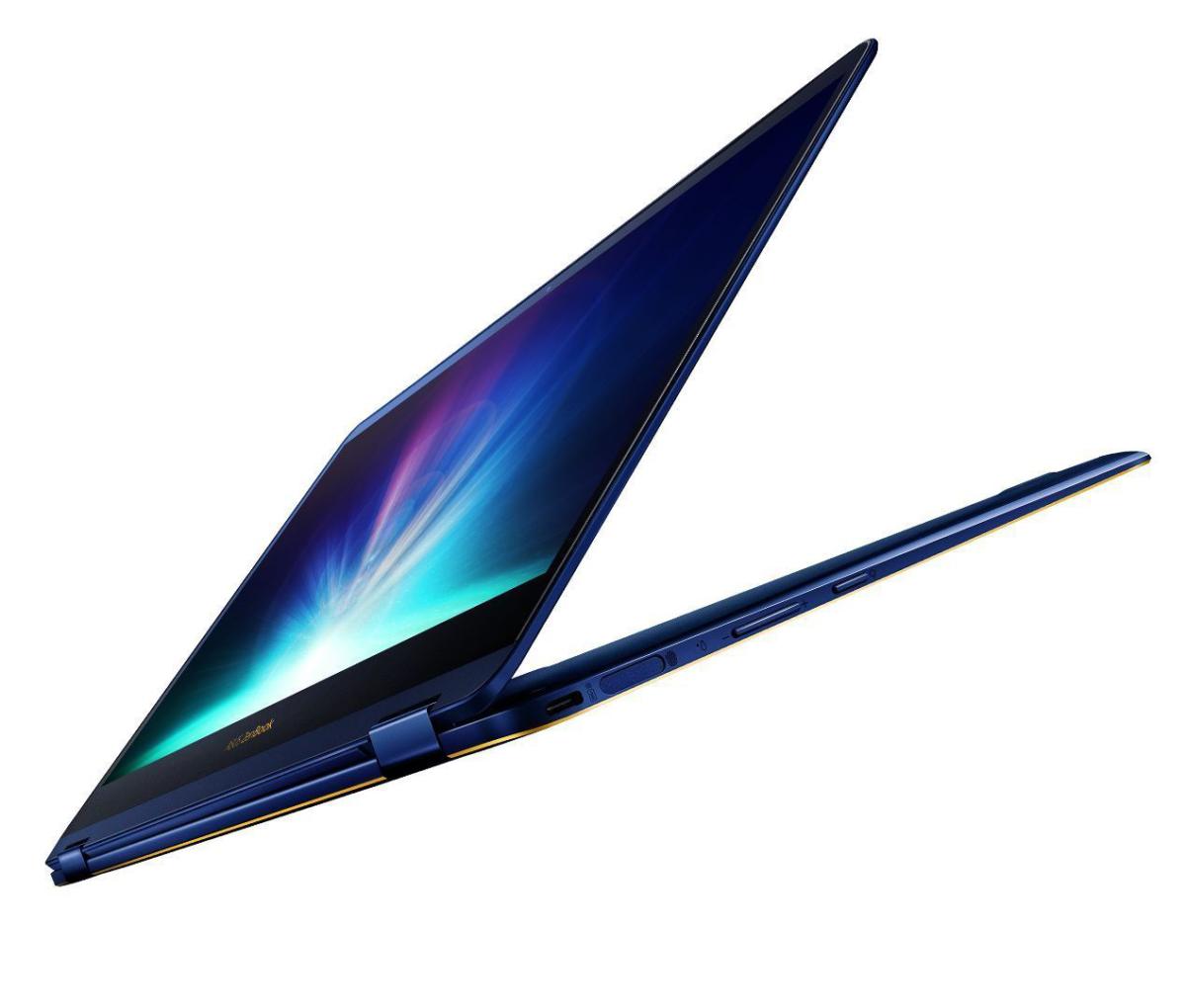
The ZenBook Flip S is even smaller than the itty-bitty Flip 14, measuring in at just 10.9mm thick with a 2.42-pound heft. Despite that tiny size the 2-in-1 harbors an 8th-gen Core i7-8550U processor, a 1TB PCIe SSD, and a fingerprint reader, as well as an option to upgrade to a 4K display.

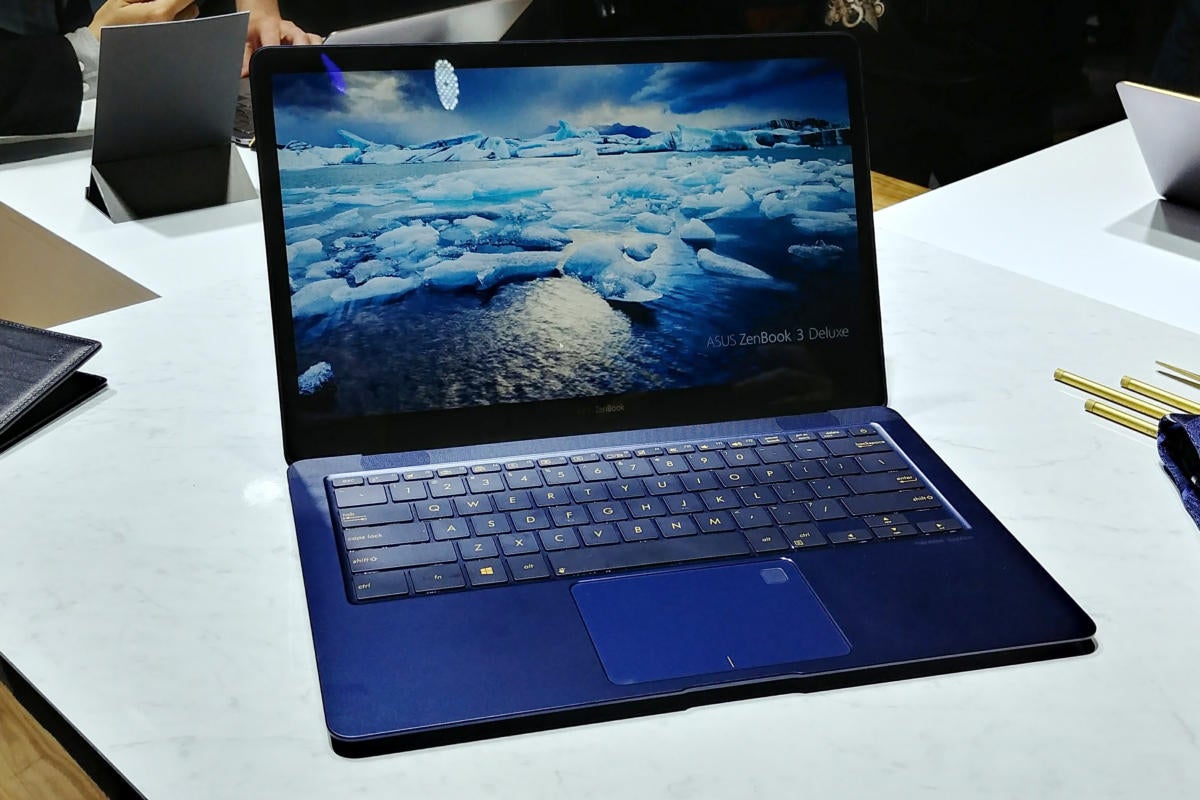
The 14-inch ZenBook 3 Deluxe and 13-inch ZenBook 13 lack the rotatable displays of the Flip models but offer similar upgraded amenities, including thin-and-light designs, 8th-gen Intel Core processors, PCIe SSDs, Thunderbolt 3 ports, and tiny NanoEdge bezels. The ZenBook 13 also includes Nvidia’s GeForce MX150 discrete graphics. The company’s slightly thicker, but more affordable VivoBook laptops received the 8th-gen CPU treatment, too.

Availability and U.S. pricing for the ZenBook laptops weren’t announced. On the opposite end of the notebook spectrum, Asus’ ROG gaming brand revealed the ROG Chimera, a hefty gaming rig that brings buttery-smooth 144Hz G-Sync displays to laptops.


120W ADP-120MH-D AC/DC Laptop AC Adapter for MSI GE60 GE70 19.5V 6.15A

120W Slim ADP-120LH B Laptop AC Adapter for Lenovo Y410P Y510P

200W 19V 10.5A Laptop AC Adapter for Chicony Clevo K790S G7 Z7-S2SP2

200W 19V 10.5V Laptop AC Adapter for Samsung NP700G7A NP700G7C DP700A7D

20Wh 7.4V New Battery Dell TM9HP For Dell Latitude 13 7350 Ultrabook

Speed up Windows 10: Tips for a faster PC

Your Windows PC too slow? Here are nine speed tips to give your PC a performance boost without spending a dime.

Your computer is slow. Annoyingly slow. You can add RAM, or buy a faster SSD, but that costs money. No, the first thing you should do is try to make Windows faster. Thus we present nine ways to speed up your Windows 10 PC without spending a dime.

  1. Give it the reboot

If your PC is behaving horribly slow, try rebooting. Yes, it’s an obvious solution, but people tend to forget the obvious.

The sleep or hibernate setting will save power, but only a full reboot clears out the cobwebs in Windows’ brain and gives it a fresh start. Do it every day if the PC is really slow.

  1. Turn on High Performance

Windows assumes that you want an energy-efficient computer. But you can trade electricity for speed. Use this tip only if you’re willing to increase your electric bill and decrease your battery performance.

Right-click the Start button and in the resulting menu, select Power Options.

In the resulting Control Panel window, pull down the Show additional plans option. Select High performance.

  1. Undo some appearance options

Windows works hard to make the screen easy on the eyes.  If your PC is underpowered, you may want to sacrifice aesthetics and gain some speed.

Right-click Start, and select System. In the resulting Control Panel window’s left pane, select Advanced system settings.

This brings up the System Properties dialog box, already on the Advanced tab. Click the Settings button in the Performance box (the first of three “Settings” buttons on this tab).

This brings up another dialog box. You can uncheck some of the options, or simply select Adjust for best performance.

  1. Remove unneeded autoloaders

A whole lot of programs want to load automatically every time you boot. Each one slows down the boot process, and some continue to slow down Windows afterwards.

These are not all bad. Your antivirus program should load when you boot and keep running as long as your PC is on. Other programs that need to run in the background to work, such as OneDrive, should also autoload.

But some programs—even good ones that you use frequently—don’t really need to run all the time. You don’t want to uninstall those, but you may want to stop them from autoloading.

To see how bad the situation is, right-click the taskbar and select Task Manager. Click the Startup tab. (If you don’t see any tabs at the top of the window, click More details in the lower-left corner.)

The Startup tab will show you all the autoloading programs. As you examine the list, think about what programs don’t really need to keep running at all times. To stop one from loading automatically, right-click its entry on the Startup tab and select Disable.

If you don’t recognize the name of an autoloader, right-click it and select Search online to help you find more information.

  1. Stop hog processes

Your computer may be running a poorly written process that’s hogging a lot of resources. To find out, right-click the taskbar and select Task Manager. (Once again, if you don’t see any tabs at the top of the window, click More Details.)

On the Processes tab, click the CPU column header to sort by processor usage. The top items will be the ones hogging the CPU. (If the top processes are all using 0%, the processes are sorted in the wrong direction. Click the column header again.)

Don’t assume that the top process is necessarily a hog. Some big applications are worth the CPU cycles. One way to manage these programs is to close them when you’re done with them. Another is to switch to a smaller program.

If the hog is Windows Driver Foundation, see this Windows Club article.

You can close a process from inside Task Manager. Select the process and click the End task button and confirm your decision. But this should be avoided.

When you’re done, click the Memory column header and repeat.

  1. Turn off search indexing

When you search for a word across all the files in your Documents library, the results come up almost immediately. That’s wonderful, but it comes at a price. When you’re not searching, the indexing needed to create those fast searches slows you down.

To turn off all indexing:

  1. Open Windows Explorer, right-click your C: drive, and select Properties.
  2. On the General tab, uncheck Allow files on this drive to have contents indexed in addition to file properties.
  3. In the resulting warning box, select Apply changes to drive C:\, subfolders and files.

Windows may take some time turning off the indexing. Get up and take a walk; it’s good for you.

There’s another option that will let you turn off some indexing but not all of it:

Type indexing in the Cortana field. Select Indexing Options. Click the Modify button near the lower-left side of the resulting dialog box.

This brings up another dialog box, with two sections. And yes, it’s confusing. Start in the bottom section of the dialog box, Summary of selected locations. Click any of these options, and it changes the contents of the top section, Change selected locations.

  1. Turn off Windows tips

Windows 10 occasionally gives you tips about how you can better use the operating system. The problem is that, in order to see what tips you need, it keeps an eye on how you’re using your PC.

Yes, that sounds worrying from a privacy issue, but it also slows down your PC.

To turn it off, click Start > Settings. Select System, then select Notifications & actions in the left pane.

At the bottom of the Notifications section, turn off Get tips, tricks, and suggestions as you use Windows.

You might also want to explore the other notification options, and turn some of them off, as well. I don’t think any of the others slow down the PC, but they can get annoying.

  1. Clean your internal drive

If your internal storage is almost full—whether it’s a hard drive or an SSD—that could be slowing you down. But if your drive has plenty of free room, skip this section.

Start with Windows’ own Disk Cleanup tool. In the Cortana field, type disk and select Disk Cleanup.

Wait while Disk Cleanup examines your drive. Click the Clean up system files button (this time you’ll need an administrator password). Then wait again for another examination.

Examine the options. If you find one called Previous Windows installation(s), you’re in luck. By checking it and clicking OK, you’ll free up a lot of space. You can check other items to get rid of them, as well.

Something else you might want to consider: Uninstall programs you no longer use.

  1. Check for Malware

I doubt an infection is intentionally slowing down your PC. There’s no illegal profits from that. Plus it’s a sure-fire way to trigger a victim’s suspicions.

But some malicious code could be slowing down your PC, even if that wasn’t the criminal’s intention. So if you’re suspicious, read Eric Geier and Josh Norem’s guide on how to remove malware from your Windows PC.

If after performing these tips, your PC still feels sluggish, it might be time to upgrade your hardware. Start here, with PCWorld’s recommendations of killer, but shockingly cheap PC upgrades.


120W ADP-120MH-D AC/DC Laptop AC Adapter for MSI GE60 GE70 19.5V 6.15A

120W Slim ADP-120LH B Laptop AC Adapter for Lenovo Y410P Y510P

200W 19V 10.5A Laptop AC Adapter for Chicony Clevo K790S G7 Z7-S2SP2

200W 19V 10.5V Laptop AC Adapter for Samsung NP700G7A NP700G7C DP700A7D

20Wh 7.4V New Battery Dell TM9HP For Dell Latitude 13 7350 Ultrabook

CrashPlan alternatives: What home users can do, from staying put to exploring other services

The easiest way out (if not the cheapest)? Just upgrade to Crashplan’s business tier.

It’s been a week since CrashPlan decided to call it quits on its personal backup service. But CrashPlan isn’t going away—it’s just ending a program that probably wasn’t profitable. After the initial shock, home users should realize there’s absolutely no reason to panic—or even be hasty. The company will keep your data safe for an extra 60 days past the end of your current subscription, and it will keep its servers online until October 23, 2018. But it’s still a good time to figure out your next move, so we’ll walk you through the options.

CrashPlan option 1: Upgrade to a business plan

You needn’t leave CrashPlan at all if you turn your home plan into a business plan. Just pony up the $10 a month for the small business plan and keep on keepin’ on. The company (Code42) is also offering a 75% discount to users for the first 12 months.

CrashPlan option 2: Free or cheap alternatives

If the business plan doesn’t fit your budget, then what you need to do depends on how you used CrashPlan. If you simply maintained a backup of your current data with the service, you don’t even need to download your backup from CrashPlan. Just start backing up elsewhere.

There are any number of free services for small data sets: 15GB Google Drive, 5GB iCloud, 5GB OneDrive, and 5GB Dropbox. You may also choose from low-cost tiers of pay services, including the one CrashPlan recommends—Carbonite. In fact, Carbonite is offering a 50% discount for CrashPlan users.

CrashPlan option 3: Download archives

If you used CrashPlan for archiving—that is, you stored data on the company’s servers without keeping a local copy—then you’ll need to download that to your local PC before your subscription ends (plus the 60-day extension). The CrashPlan servers might be a tad stressed right after the announcement, but wait a couple of weeks and you should be able to download without undue delay. If you procrastinate, you could always move to the $10-a-month business plan until you got your act together.

CrashPlan option 4: External backup

If CrashPlan was your only backup, now is a good time to consider backing up your backup—combining a cloud service with backup to an external drive. Check out our backup software reviews to find our recommendations.

Note: This article was edited to capitalize the “P” in CrashPlan at the request of the company, as well as to note the one-year 75% discount for exiting users when they change to the business plan.


120W ADP-120MH-D AC/DC Laptop AC Adapter for MSI GE60 GE70 19.5V 6.15A

120W Slim ADP-120LH B Laptop AC Adapter for Lenovo Y410P Y510P

200W 19V 10.5A Laptop AC Adapter for Chicony Clevo K790S G7 Z7-S2SP2

200W 19V 10.5V Laptop AC Adapter for Samsung NP700G7A NP700G7C DP700A7D

20Wh 7.4V New Battery Dell TM9HP For Dell Latitude 13 7350 Ultrabo

How to transfer everything from your old Android phone to your new one

Moving to a new phone can be a pain. Android might have the edge over iOS when it comes to tight integration with cloud services, but Google still has a ways to go when it comes to effortlessly transferring all your data off your old phone and onto the new one.

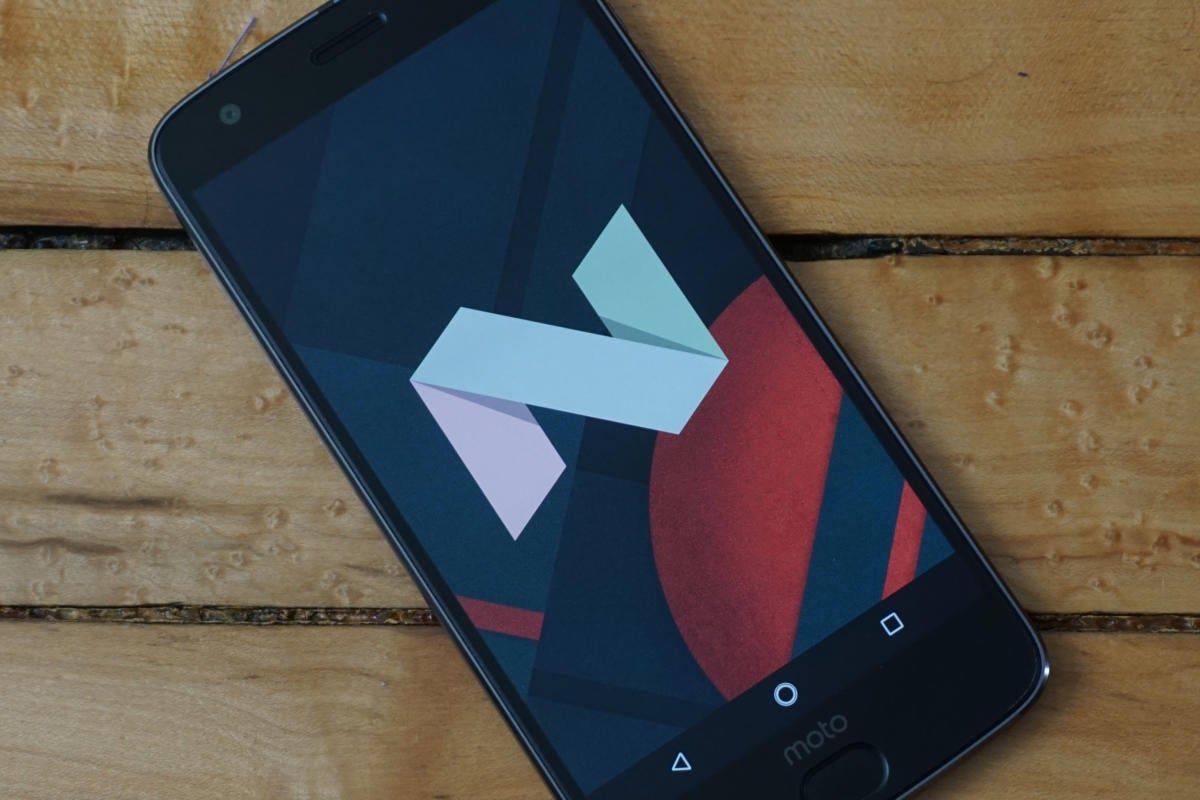
But it has gotten better. You’ll need to rely heavily on Google’s services, of course, but with Android Nougat, moving your personal info has never been easier. It’ll still take a some vigilance and a little work, but you don’t need to be an Android whiz anymore to ensure your data is ready to move the next time a catastrophe hits your phone—or you just really want a new one.

Know your backup options

Before you can do anything, you’ll need to make sure your old phone is signed in to your Google account. It almost certainly is, but head over to the Google tab in Settings to m